The Hardest Part of Parenting: Letting Them Struggle
For the last decade, I’ve been talking to parents about overprotecting vs. empowering. I’ve explained the science behind resilience, the benefits of giving children opportunities to learn, and how to empower them with tools they can rely on.
I often use the rain-and-umbrella metaphor as a visual reminder.
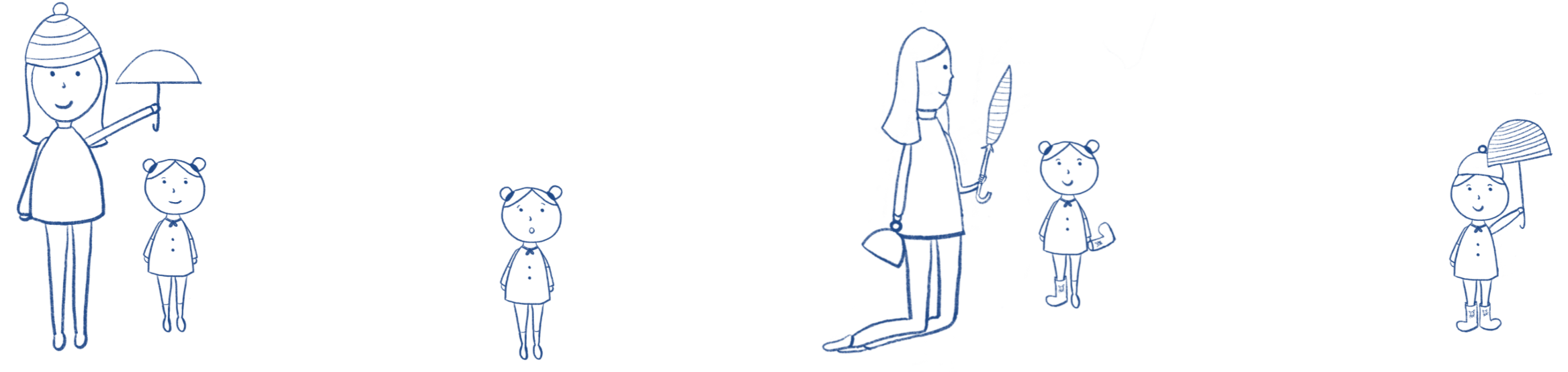
The idea is simple: we can’t always be there to hold an umbrella for our child. If we do that, the moment they find themselves outside on a rainy day, they won’t know how to keep themselves dry.
We can, however, teach children how to open an umbrella, wear boots, use a muddy buddy, and where to find those even when we’re not around. That’s exactly what resilience tools are. They give children a sense of control, confidence, and courage.
Yet, as a first-time mother of a curious 3.5-year-old, I’ve found myself crossing that line between overprotecting and empowering.
I’m an advocate for risky play. Yes, I know all its benefits. But sometimes knowing doesn’t automatically translate into practice. When I watch my child engage in risky play, my body starts sending me anxiety signals. Should I just sit and observe? How risky is too risky? How safe is “still within boundaries”? What if she falls?
It’s hard. It’s hard for a parent to know when to intervene and when to give space.
So here is what helped me:
1- Living what I believe about children
I’ve always believed children are capable. But believing it and actually living it in those everyday moments? That’s different. It’s one thing to know children can make wise choices. It’s another to step back and let them do it, especially when your instinct is screaming at you to intervene.
When my daughter was younger and attempted to climb the rope stairs on the slide for older kids (and seemed to be struggling as she was trying to find her balance), I would jump in and hold her up, or keep my hand right under her so if she fell, I’d be there to catch her. The moment I let her (and myself) try it on her own, I was amazed.
She was, indeed, perfectly capable of understanding her limits. After the third step, she decided that was it. That was the height she felt comfortable with, and she didn’t try going higher. That was a moment of enlightenment for me. By trusting her judgment, I empowered her to listen to her body’s signals, analyze them, and make a decision.
That's when I realized I needed to embody what I believe, not just say it.
2- Becoming aware of my anxiety and questioning where it’s coming from.
Is it about my child or me? Why is it so hard to watch her struggle (or fail)? What is this anxiety telling me? That’s where mindfulness comes in. Instead of reacting to the initial impulse that tells me to yell “Be careful!” or stop her from exploring her limits, I take a breath and choose to respond. That’s when I notice I’m no longer acting from the amygdala but from the logical part of my brain, the part that can assess the risk and intervene only if it’s really necessary.
The Urge to Fix Unpleasant Feelings
While it’s easy to notice our anxiety during risky physical play, overprotection often shows up more subtly in our children’s emotional lives.
Do you ever find yourself rushing to protect your child from unpleasant feelings or challenging experiences?
As a parent, I've had so many moments where I wanted to stop my child's sadness or end her struggles. With a 3.5-year-old, these moments can seem small: a friend at the playground saying "not now," or a LEGO piece that just won't fit. But to her, these emotions are big and sometimes overwhelming.
Our natural instinct is to jump in and fix the problem, especially when the solution seems so simple to us. But when we intervene too quickly, we unintentionally deprive them of the opportunity to learn, build resilience, and develop confidence. Even more, by fixing every struggle, we end up sending a powerful message: "You aren't capable of doing this on your own."
Instead of constantly solving my daughter's problems, I've learned to sit with her in her discomfort. I'm there, present, offering her a sense of safety. I try to witness her emotions with compassion and share my calm, rather than my anxiety. By giving her the space to struggle while staying close, I'm equipping her to realize she can handle the "storms" of life.
Self-Reflection
This has also been a space of deep self-reflection in my own parenting journey. I am learning, and still practicing, how to notice that immediate urge to fix things the moment my daughter struggles. I’ve realized that how I meet her big emotions is deeply connected to the compassion and non-judgment I can show toward my own feelings.
The truth is, we all cross that thin line between overprotecting and empowering from time to time. And that’s okay. What matters is the awareness to notice it and the courage to look at what it reveals about our own internal world. Every one of these moments is more than just a parenting challenge; it’s an opportunity for our own growth, too.
So, next time you see your child struggling with a hard-to-solve puzzle, or an “impossible to climb ladder,” what will you choose? Can you stay with this discomfort for a minute and just see what happens? It doesn’t mean you pretend you don’t exist - maybe it is all about finding that sweet spot of encouragement and presence, and not constantly intervening and being the one and only “ problem solver.”